Most backup-power decisions are made under duress — after an outage, a storm, or a compliance deadline — and evaluated purely as a cost to be minimized. Aluminum-air invites a different framing. Because its fuel is abundant, recyclable aluminum rather than diesel or scarce critical minerals, the total cost of ownership picture looks structurally different. Let us walk through where the savings actually come from.
Note: This article explains the general economics of the technology. It is educational, not a financial guarantee — real ROI depends on your load profile, local energy prices, and configuration.
1. Fuel Cost: Abundant and Recyclable
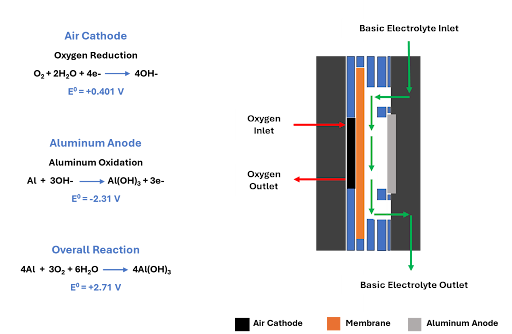
Diesel generators are cheap to buy and expensive to feed, with fuel costs that swing with volatile commodity markets. Aluminum-air runs on a fuel that is the most abundant metal in the Earth's crust — about 8% of it by mass — and flows through a mature recycling supply chain. Systems can even be fueled with post-consumer aluminum, which means the same material a facility might pay to dispose of can instead be converted into power.
2. Maintenance and Downtime
Combustion generators carry ongoing maintenance burdens: oil changes, filters, exhaust systems, and periodic test runs. Aluminum-air has no combustion and far fewer moving parts. Refueling is mechanical — swapping aluminum plates — which means effectively zero charging downtime, unlike rechargeable systems that are unavailable while they recharge.
3. Safety and Insurance Exposure
Lithium-ion's flammable electrolyte introduces thermal-runaway fire risk, which carries real costs: siting restrictions, fire-suppression requirements, and insurance premiums. Aluminum-air's water-based, non-flammable electrolyte sidesteps that entire risk category — a genuine, if often overlooked, line item in total cost of ownership, especially for hospitals, data centers, and residential installations.
4. Performance That Now Covers More Loads
ROI only materializes if the system can actually carry your load. This is where recent progress matters: 2026 peer-reviewed research pushed aluminum-air peak power density to a record 710 mW/cm², with strong sustained output in extended discharge. Higher power means a given system can serve more demanding loads, improving the value you get per unit of installed hardware.
A Simple Way to Think About Total Cost of Ownership
When comparing options, look past the sticker price and add up the full lifetime picture:
- Upfront hardware cost
- Lifetime fuel cost (and its volatility) — where recycled aluminum can dramatically lower the ongoing spend
- Maintenance, testing, and downtime
- Safety, siting, and insurance costs
- End-of-life and disposal — where aluminum's recyclability and sellable byproducts create residual value
Diesel often wins on line one and loses on the rest. Lithium-ion carries safety and sourcing costs. Aluminum-air is designed to win on the long-run lines — the ones that quietly dominate total cost over a system's life.
The Circular-Economy Bonus
There is one more lever unique to this chemistry. The aluminum byproduct generated during operation (aluminum trihydroxide, or ATH) can be recovered and sold to secondary markets. In a well-designed system, the "waste" becomes a second revenue stream — the essence of a circular energy economy.
The best backup power isn't just a cost you hope never to use. It's an asset that pays back through cheaper fuel, lower risk, and recoverable materials.
Want a realistic ROI estimate for your site or fleet? Contact us to talk through your load profile and configuration.