Lithium-ion is the default answer to almost every energy-storage question in 2026 — and for good reason. It is mature, rechargeable, and mass-produced. But "default" is not the same as "best for every job." Aluminum-air is a fundamentally different chemistry with a different set of strengths, and understanding the trade-offs helps you match the right technology to the right application.
Energy Density: Aluminum-Air's Standout Advantage
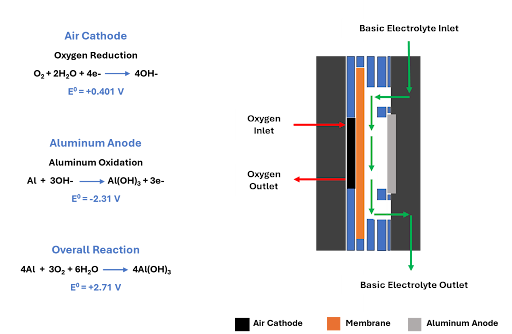
On paper, aluminum-air is in a class of its own. Its theoretical energy density is roughly 8,100 Wh per kilogram of aluminum — because it pulls its oxidizer (oxygen) straight from ambient air rather than carrying it inside the cell. Lithium-ion, by contrast, must carry all of its active materials on board, which caps practical energy density far lower.
Real cells never hit theoretical numbers, but the gap is meaningful. Recent peer-reviewed work demonstrated around 2,500 Wh/kg on an aluminum basis in a working cell. That headroom is exactly why aluminum-air is so attractive for weight-sensitive, long-duration applications.
Safety: Water-Based vs Flammable
This is where the two chemistries diverge sharply. Aluminum-air systems typically use a water-based alkaline electrolyte — non-flammable by nature. Lithium-ion uses flammable organic electrolytes and is susceptible to thermal runaway, the chain reaction behind battery fires. For applications in homes, hospitals, aircraft, and confined spaces, a non-flammable chemistry is not a minor footnote; it is a core design advantage.
Sourcing and Sustainability
Aluminum is the most abundant metal in the Earth's crust — about 8% by mass — and flows through a mature, global recycling supply chain. Lithium-ion depends on lithium, cobalt, and nickel, which face concentrated supply, geopolitical constraints, and significant extraction impacts. An aluminum-air system can even run on post-consumer aluminum, turning waste into fuel.
The Honest Trade-Offs
Aluminum-air is not a drop-in lithium replacement, and pretending otherwise does the technology a disservice. Two real limitations stand out:
- Recharging: An aqueous aluminum-air cell is a primary battery — it is "refueled" by physically swapping aluminum plates rather than plugged in to recharge. That is a feature for some uses (instant refuel, no charging downtime) and a constraint for others.
- Power output: Historically, aluminum-air delivered energy slowly. That was the central weakness — though 2026 research pushing peak power density to a record 710 mW/cm² shows the gap is closing fast.
Which One Wins? It Depends on the Job
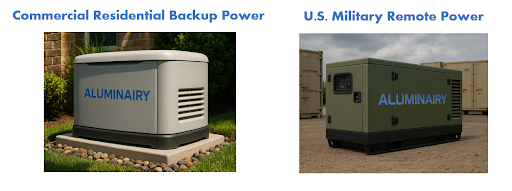
Lithium-ion remains the right pick for daily-cycled, rechargeable applications like phones, laptops, and most EVs today. Aluminum-air excels where energy density, safety, long shelf life, and grid independence matter most: backup and emergency power, off-grid and remote sites, defense, and emerging electric-aviation use cases.
The most useful way to think about it: lithium-ion is a rechargeable reservoir; aluminum-air is a clean, swappable fuel. Different tools, different jobs.
At AluminAiry, we build around aluminum-air's genuine strengths rather than forcing it to imitate lithium. The result is a clean, non-flammable, grid-independent power source designed for the jobs lithium was never ideal for.
Want to know whether aluminum-air fits your use case? See our technology page or reach out for a straight answer.